Ultrasonic Teeth Cleaning


Pet Health Starts in the Mouth
Did you know that by the time your dog is 2 years old, signs of oral disease are likely to be already present? Unfortunately, these will only get worse over time, unless treated. Happily, we are one of the only salons in South Africa to offer ultrasonic teeth cleaning for your dog!
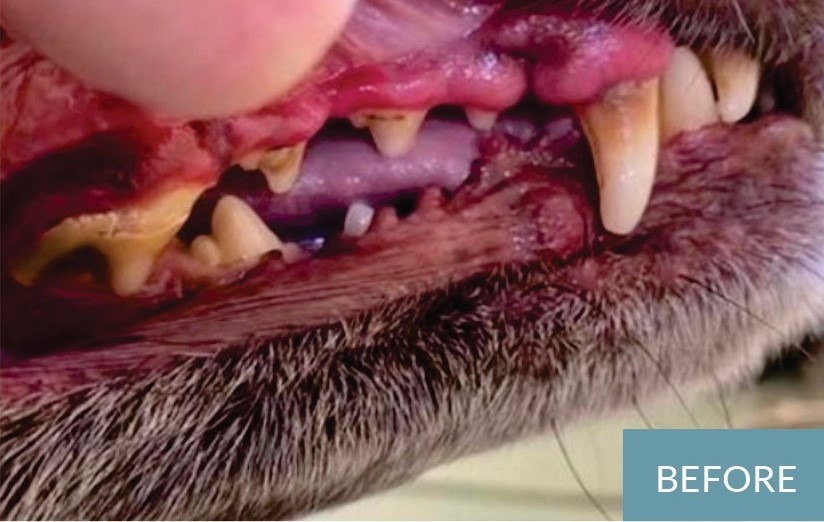
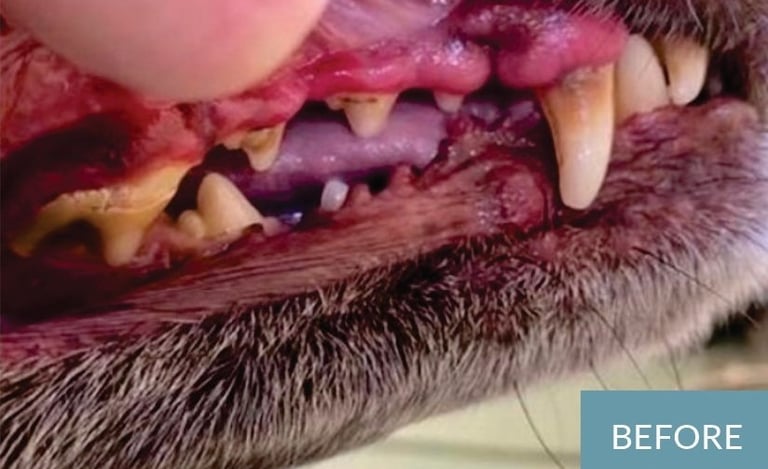
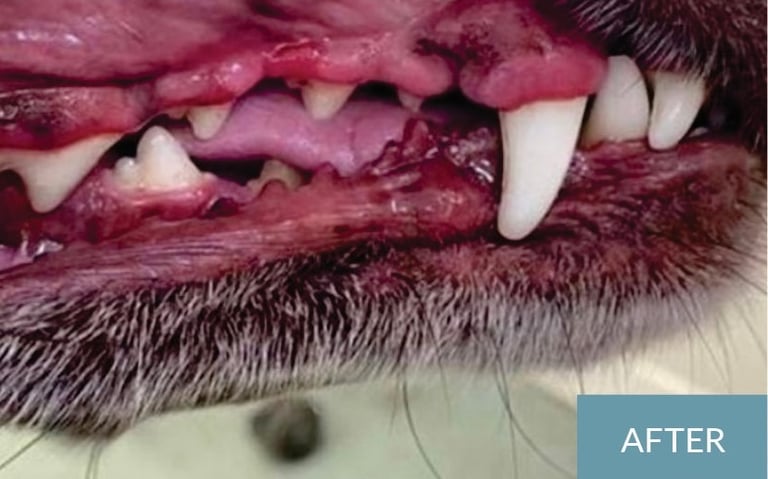
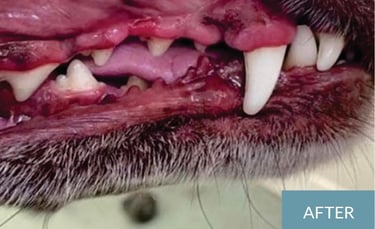
A regular schedule of ultrasonic cleaning can help to prevent the build up of visible tartar*, which causes smelly breath, inflammation of the gums and cavities.
Ultrasonic is non-invasive, vibration free and noise free, making it as stress free as possible for your furry friend. The results speak for themselves and you can finally say goodbye to the dreaded "dog breath".
*please refer to important notes below.
Pricing Structure
All new clients must have an initial treatment, which lasts about 45 minutes.
After the initial treatment, we recommend a top-up treatment every 8-12 weeks. These are offered at a reduced cost for returning clients so that you can maintain your furry friend's oral health and beautiful smile.
Of course, some dog's won't tolerate teeth cleaning unless under heavy sedation. A stressed dog is the worst possible outcome for us so, if this is the case with your four legged friend, you will not be charged.
Small Breed (< 10kg)
Medium Breed (11-20kg)
Large Breed (21kg + )
Initial Treatment
Top-Up
R300
R350
R400
R80
R90
R100
Important Notes
Our system uses Ultrasonic toothbrushes that operate silently via micro-vibrations to clean teeth surfaces above the gum line.
We do not use Ultrasonic scaling tools. Therefore, we cannot clean below the gum line, this must be carried out by your vet.
We do not use anaesthesia, your pet remains awake and conscious.
Just as brushing your own teeth and a good dental routine at home doesn't mean you should skip regular check-ups at your dentist, the same applies to your pet. Whilst regular ultrasonic cleaning can help to prevent the build up of tartar, we strongly encourage owners to continue with regular veterinary check-ups for underlying dental diseases.